Maintaining biodiversity with the roboflail
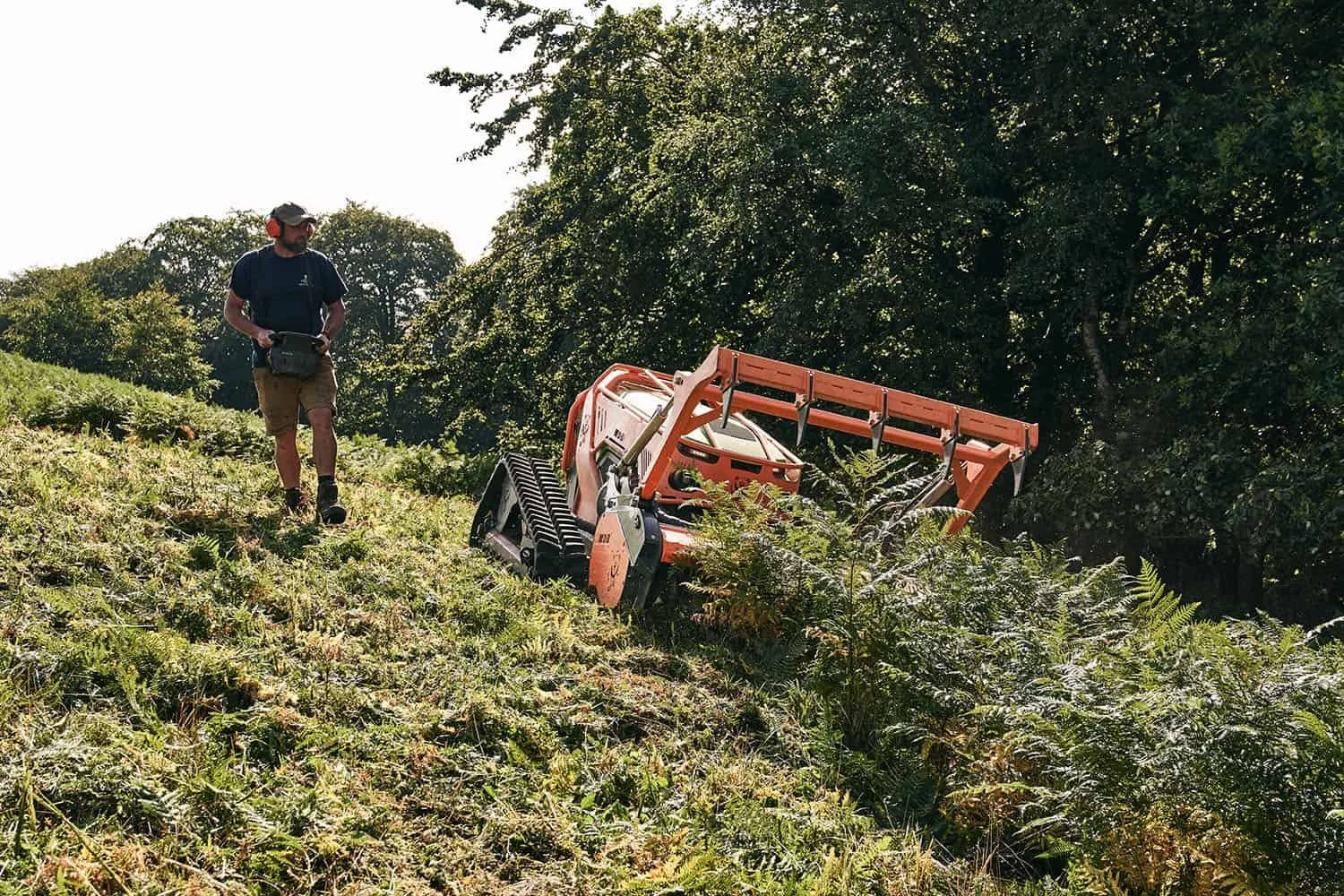
We purchased our roboflail in 2025, and it’s been an invaluable tool around the estate. It can be used on steep ground, boggy ground and difficult-to-access terrain to clear gorse, bracken and brambles. It then shreds this down to a fine mulch.
Controlling the growth of this type of vegetation encourages biodiversity by allowing the growth of other native plants. This attracts pollinators and other insects, and in turn, the wide variety of birds found in and around the Quantocks.
Restoring habitats in this way also allows native grasses to return and encourages grazing whilst causing minimal soil disruption.
Safety and Greater Control
The robot flail can work up to 150 meters away from the operator, though we find the greatest benefit is that the operator can work alongside, keeping a close eye on where it’s steered. This is an important benefit for conservation, allowing the operator to steer around saplings and nesting birds, things that would have been missed if using a rear-mounted machine on a tractor.
From a safety perspective, when using a tractor, you are constantly looking behind you, which means you may miss obstacles that aren’t obvious, such as ant hills or discarded wire.
We also have a muthing flail – which is the Bentley of flails (in Jim’s words), the heaviest flail you can get – a swinging hammer flail. It is a very adaptable and accurate machine that can be set within millimetres and adjusted at travel, which is important when cutting heather and gorse to get down below the crowning point without destroying the main ground cover.
A Trusted Service
We’ve undertaken projects for The Woodland Trust, Farming and Protected Landscape, and Quantock Hills ANOB. We are licensed by Natural England to use it in our SSSI areas.
If you have an area that needs cutting, our machine and operator are available to hire.
